
.jpg)
THE SCARLET (LAW)SUIT
This week, as a new lawsuit hits Rutgers over its massive sports deficit, we’re looking at why the answer isn’t just cutting costs, but maximizing revenue. Particularly through data. We're also celebrating a huge month for our partners in the Big Dance while news pours in on the increasing costs of maintaining an elite athletic program.
- Aaron
THE RUTGERS RECKONING
DATA AND THE DEFICIT TRAP
.jpeg)
The lawsuit filed by a Rutgers graduate against his alma mater for "gross negligence" regarding its $516 million athletic deficit since joining the Big Ten is the latest flashpoint in the escalating financial arms race of college sports. It’s easy to look at that number and see a balance sheet in flames, but the reality is more nuanced.
While we're not legal experts analyzing the suit itself (even if it's likely to be dismissed), the issue does bring front and center the larger challenges around revenue and financial health that is not at all unique to the Scarlet Knights.
The Court of Public Opinion
Since joining the Big Ten, Rutgers has been playing catch-up, spending heavily on coaching and facilities while waiting for a full revenue share that won't arrive until 2027. While there is some nuance in what counts as revenue according to the NCAA and the school itself, like state support for example, even that source is starting to feel the pinch.
The pressure is now moving beyond the courts and into the court of public opinion. A recent report from NJ.com highlights that New Jersey voters have reached a breaking point with the "open checkbook" era of athletic subsidies. The sentiment is clear: the public is weary of footing the bill for a program that hasn't yet translated high spending into high utility for the state’s taxpayers.
Rutgers Is Not Alone
This same financial friction exists across the collegiate landscape. According to The Athletic deep dive into Big Ten financial reports, the entire conference is grappling with the "sharing gap" between record-breaking media rights and the rising variable costs of modern athlete economics.
Across the Power 4, schools are discovering that a larger conference footprint doesn't automatically mean a healthier bottom line. The delta between gameday revenue and escalating labor costs is widening, leaving athletic directors frantically searching for "new money" that doesn't cannibalize existing donor pools.
This is a challenge felt by every major program trying to bridge the "sharing gap" between fixed labor costs, like athlete payments, and variable revenue from winning or losing seasons.
Our POV: A Foundation Problem
At Equipe, we agree with Rutgers President Tate and AD Keli Zinn’s assessment that they don't just have an expense problem, they have a revenue problem. You cannot build a winning program in a Power 4 conference by cutting your way to prosperity. The challenge is not just that they are spending too much. The return on that investment is being stifled by a lack of granular fan intelligence. Rutgers sits in the middle of the most valuable media market in the world, yet without a unified data foundation, those millions of potential customers remain a blurred "Grounds Pass" audience rather than a list of high-propensity leads.
Rutgers has shown an ability to get folks in seats like with their sold out women's volleyball game last season. The challenge now is making that consistent. Without insights, it's hard to know what levers to pull. But with visibility into ticket purchases for visiting teams, specific seat data, and propensity scoring we believe Rutgers could realize the full value of their unique location and Big Ten association.
When your ticketing data doesn't talk to your real-time venue entry or merchandise data, you lose the ability to make live decisions. If you don't own a unified, accurate, and authoritative data foundation, you are forced to rely on "static" policies rather than dynamic, data-driven adjustments that could fill empty seats and drive missing revenue.
Right now, many departments are running their revenue strategy in the dark, relying on slow manual Excel exports that ensure feedback arrives too late to actually improve the fan experience.
To fix a $500M hole, you have to go to where the money is, and you can only go where you can see.
💡PRODUCT HIGHLIGHT
SEGMENTATION THAT STAYS FRESH
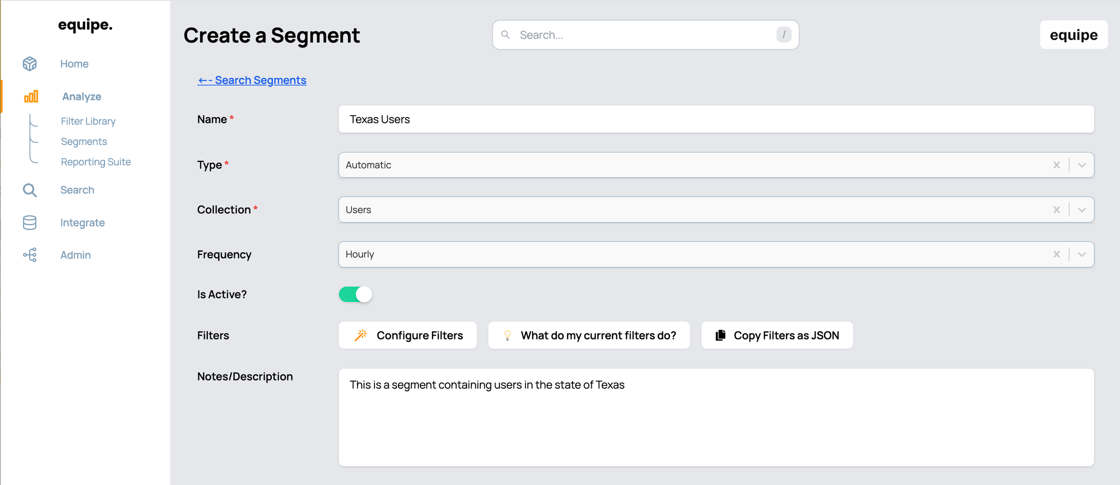
In most athletic departments, a "priority list" is just a CSV that starts dying the moment it is exported. If a Development Officer wants to track a specific group of high-potential donors, they are usually stuck manually updating a scattered spreadsheet or waiting 48 hours for a data pull that is already out of date. Your strategy is always one step behind your fans' actual behavior.
Equipe Segmentation turns these static spreadsheets into living, breathing audiences. Whether you are hand-picking a "Major Gift" prospect list through our manual controls, or letting our filters automatically group every fan who lives in Texas and spent $1k+ this month, your data stays in sync with reality. With automatic refreshes available as often as every hour, your frontline staff can stop wondering if the data is right and start making the play.
- Manual Prospect Tracking: A hand-curated list of high-value golden records for dedicated outreach, managed directly in the Equipe UI.
- Automatic Loyalty Groups: An auto-refreshing segment of every fan who has attended five or more games this season, keeping your rewards programs current.
- High-Propensity Donors: A group of $5k+ donors who also bought $200 in merchandise, which Equipe updates daily to surface new leads for your development team.
🏢 FROM EQUIPE HQ
TOURNAMENT SEASON IS OVER
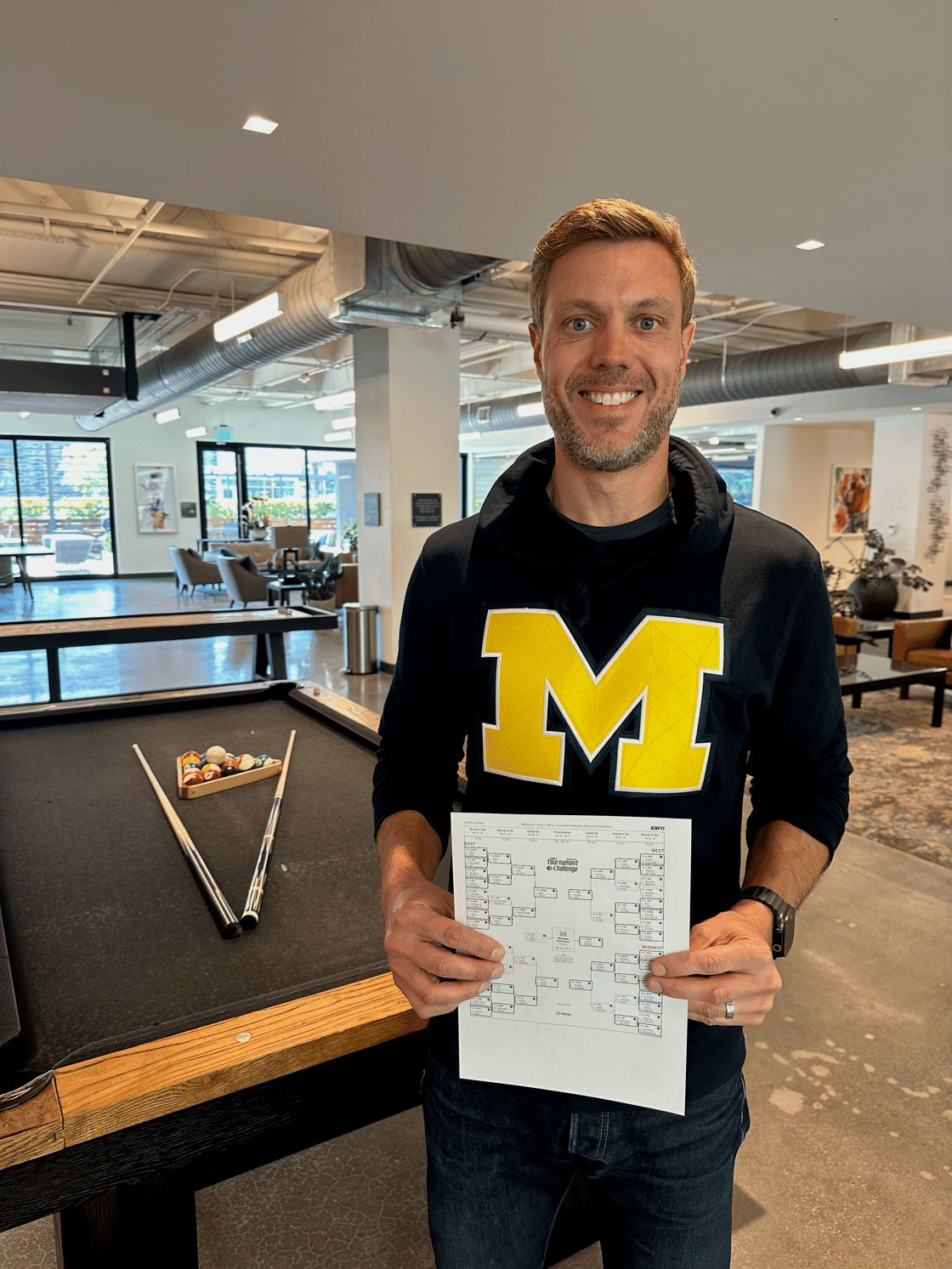
Congratulations to UCLA Women's Basketball on their first NCAA National Championship and to the Michigan Men's Basketball squad on their second National Championship. Sajan was in Indianapolis to witness the championship live. Nick got to celebrate not only his team winning but also placing first in the inaugural Equipe bracket challenge with a 99.5% accuracy coming in the top 150,000 of all brackets created on ESPN. At press time his comment was "this thing isn't just a hat hanger" while pointing to his head.
We also want to give a special shout out to the Longhorns and Gamecocks on a fantastic season. Seeing both programs operate at such a high level, both on the court and in their data departments, is exactly why we do what we do. We're proud to support the teams that are setting the standard for the next decade of sports business. 🤘🐓
🗞️ WHAT ELSE WE'RE READING
BOOSTERS, BRICKS, BOTS
The arms race for Power 4 dominance is shifting from the weight room to the concourse, as schools like West Virginia pivot toward high-utility, fan-facing venue investments. While UCLA’s $10 million gift reinforces the critical role of major donors, SeatGeek’s launch in ChatGPT proves the industry's digital front door is becoming increasingly conversational.
- West Virginia renovation projects emblematic of college sports’ sudden pivot to fan-facing venue investment
- $10 million gift from Angelo Mazzone III strengthens UCLA football for a new era
- SeatGeek Launches in ChatGPT